


Blog
What Is the $5000 HVAC Rule and When Should I Use It?
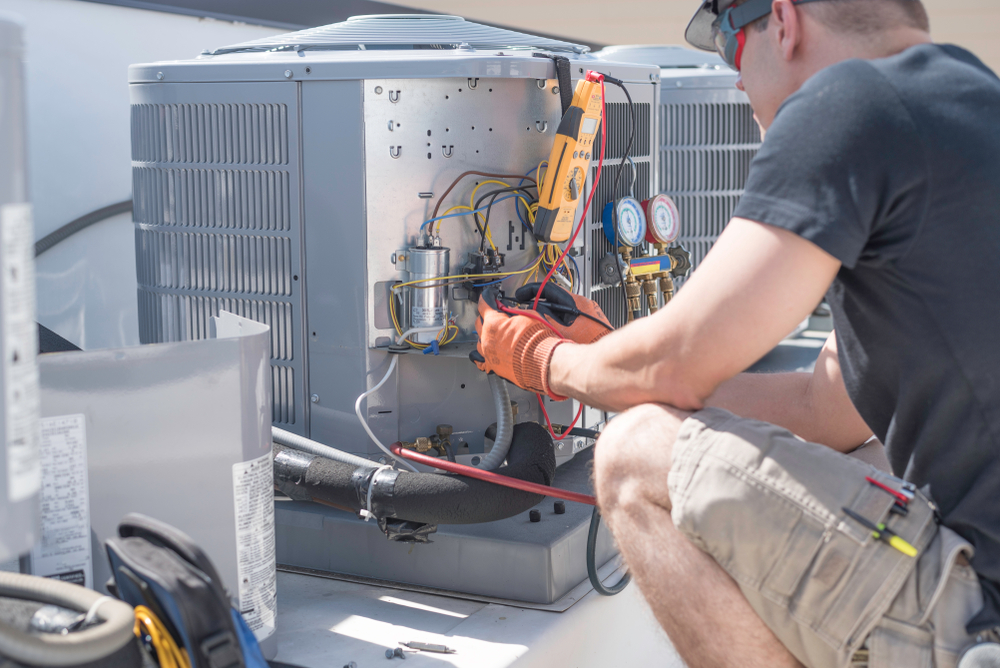
Your HVAC is one of the more expensive household appliances. Repair and replacement cost much more than homeowners assume. The $5,000 HVAC rule is a basic guideline that helps homeowners decide whether to repair or replace an aging heating or cooling system.
It prevents homeowners from overspending on repeated repairs and makes it easier to make a decision. Use this rule to evaluate your HVAC system before scheduling an AC replacement in St. Paul or making another major home investment.
What the $5000 HVAC Rule Means
Multiply the age of the system by the estimated repair cost. If the result exceeds 5,000, replacement is often the smarter option. For example, an 8-year-old HVAC with a $500 estimated repair cost gets you 4,000. Since this number is less than 5,000, the homeowner may feel more comfortable going through with a repair.
How to Use the Rule
Essentially, this guideline helps compare the age of the unit with the price of the repair. The result can help homeowners think more clearly about repair versus replacement, but it's not a hard and fast rule. An experienced team of HVAC technicians in Minneapolis can also help you interpret the results and recommend the best course of action for your system.
When the Rule Works Best
The rule is most useful when a system is older, and the repair estimate is significant. Many small AC problems, such as a clogged drain line or dirty condenser coil, are relatively inexpensive to fix and are usually worth repairing, even on an older system. A $100 repair on a 20-year-old unit may keep your system running for a bit longer at a relatively low cost.
If, on the other hand, the unit has had several previous breakdowns, with each one becoming increasingly expensive, then it may be worth running the $5,000 rule and considering your options.
When You Should Not Rely on It Alone
The $5,000 rule is a helpful starting point, but it should not be the only factor guiding your decision. Every HVAC system is different, and the right choice depends on its overall condition, efficiency, repair history, and how well it keeps your home comfortable. For example, a newer air conditioner that has needed one major repair may still have many years of reliable service left, making it the more cost-effective option, even if running the $5,000 rule yields a number that’s slightly higher than 5,000.
Your long-term plans also matter. If you expect to stay in your home for many years, investing in one of the best AC brands may provide greater efficiency, comfort, and savings over time. If you're planning to move soon, repairing the existing system may be the more practical choice.
A professional HVAC inspection can put the repair into context by estimating the system's remaining lifespan and helping you determine your best options.
Other Factors to Consider
Warranty coverage can influence your decision. If expensive parts are still covered under the manufacturer's warranty, repairing the system may be far more affordable than replacing it. However, if the warranty has expired and repair costs continue to add up, a new system often provides better long-term value.
It also makes more sense to replace the system if it’s unreliable or costly to operate.
Why Trust Total Comfort to Handle All of Your HVAC Needs
The Total Comfort technicians are experts at all things HVAC. Whether you need AC repair in the Twin Cities or comprehensive heating services in the Twin Cities, Total Comfort provides honest recommendations tailored to your home's needs.
Our technicians provide honest recommendations and service tailored to local homes. Planning your AC replacement is easy with help from the experts at Total Comfort.
Schedule OnlineFrequently Asked Questions
No, there are exceptions to every rule. Homeowners can use the $5,000 rule as a guide but not a definitive requirement. HVAC repair or replacement must be evaluated holistically.
Yes, it does. The $5,000 rule is applicable to any expensive home system.
Not necessarily. An HVAC unit can last for 20 years or more if cared for properly. Priority maintenance plans help reduce unexpected breakdowns and extend the life of your HVAC equipment.
Homeowners should consider the system's age, previous repairs, and warranty coverage before making a decision.